
Costa Tropical
General overview
General Overview — Costa Tropical
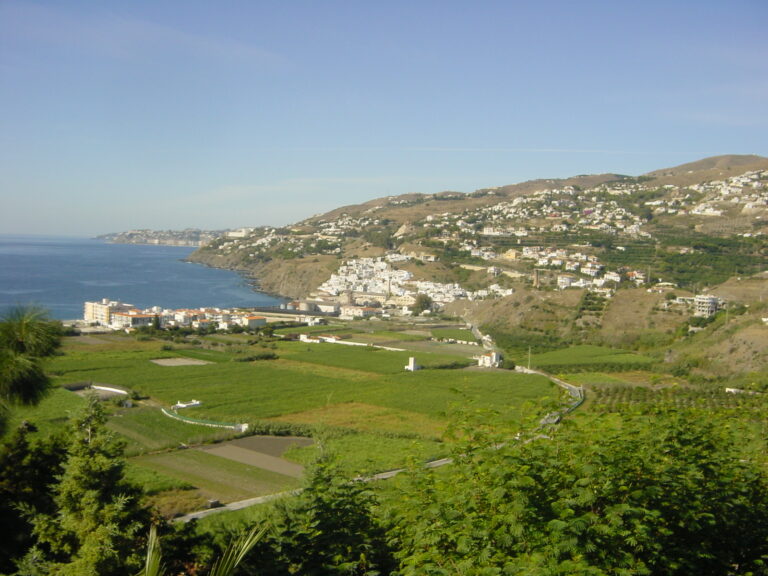
The Costa Tropical is one of southern Spain’s best-kept secrets. Located along the coastline of Granada province, between Málaga and Almería, this region offers a completely different Mediterranean experience — greener, quieter and far more authentic than the better-known Costa del Sol.
Its name comes from its unique subtropical microclimate, created by the Sierra Nevada mountains behind it and the Mediterranean Sea in front. This natural protection results in mild winters, warm summers and fertile land — making the Costa Tropical the only area in continental Europe where tropical fruits such as avocados, mangoes and custard apples grow naturally.
Unlike heavily developed coastal regions, the Costa Tropical has evolved slowly. Urban planning is more restrained, building heights are lower, and large-scale resort tourism has remained limited. This has preserved the region’s natural beauty and traditional character.
A Coast Defined by Nature
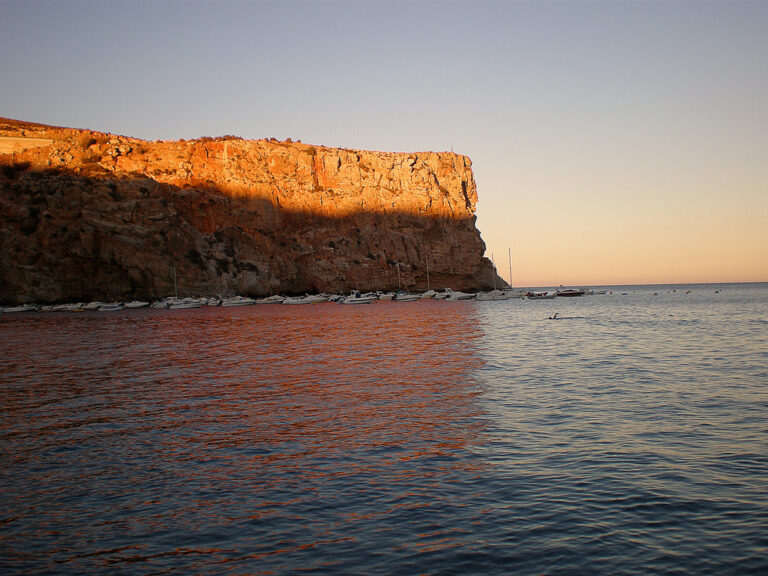
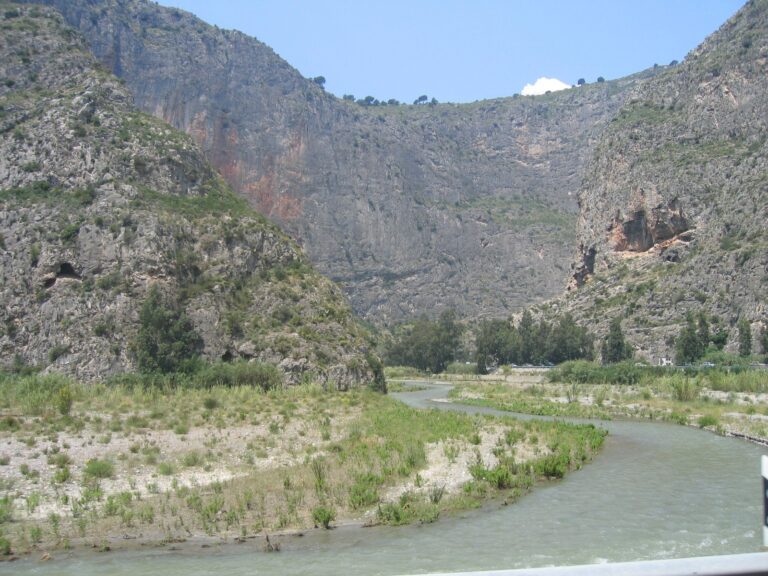
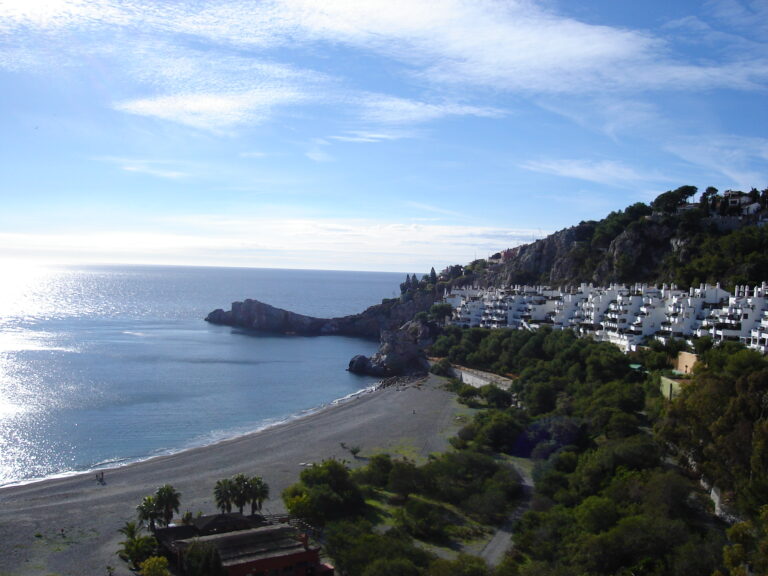
The landscape here is dramatic and varied. Steep cliffs drop into hidden coves, small beaches alternate with fishing villages, and green valleys stretch inland toward the mountains.
Within less than an hour, you can move from the sea to the snow-covered peaks of the Sierra Nevada, creating one of the most diverse natural settings in southern Europe.
Towns and Villages with Identity
The Costa Tropical is not one continuous urban strip. Instead, it is made up of independent coastal towns and white villages — each with its own rhythm, traditions and community.
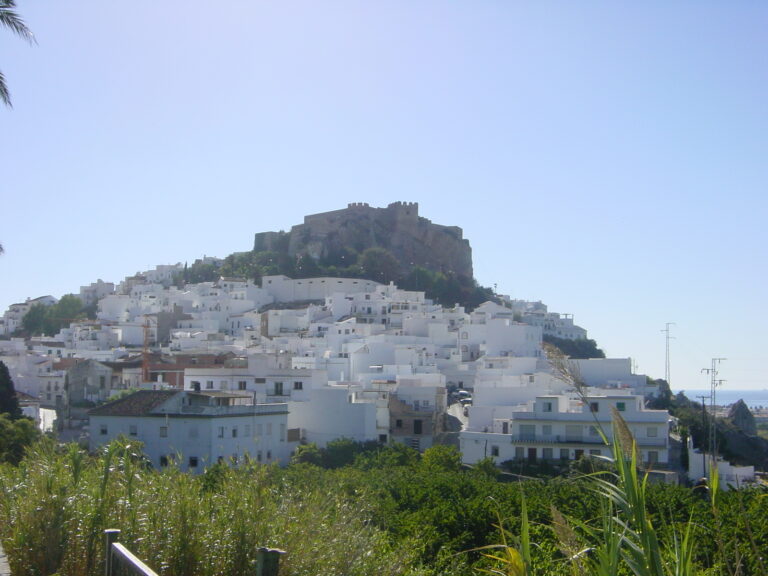
Places such as Almuñécar, La Herradura, Salobreña and Motril form the backbone of the region, supported by smaller villages inland where life still follows agricultural and local routines.
This fragmented structure gives the area authenticity — and space.
A Lifestyle for Those Who Value Calm
Life on the Costa Tropical is slower and more grounded. Tourism exists, but it does not dominate daily life. Most towns function year-round, supported by local residents, Spanish families and a modest but growing international community.
The lifestyle here is shaped by:
-
Nature and outdoor living
-
Local food and agriculture
-
Sea-based activities and walking culture
-
Strong community connections
It appeals particularly to buyers seeking peace, space and originality, rather than prestige or glamour.
Growing Interest, Carefully Managed
In recent years, the Costa Tropical has gained attention from buyers looking beyond saturated coastal markets. Improved infrastructure, including motorway connections and proximity to Málaga Airport, has made the region more accessible — without triggering mass development.
This balance between accessibility and preservation is one of the Costa Tropical’s strongest long-term advantages.
Why Buyers Are Looking Here
The Costa Tropical attracts people who want something different:
-
Authentic Spanish life
-
Natural surroundings
-
Sea and mountain proximity
-
Lower density living
-
Long-term lifestyle value
It’s not a place designed to impress — it’s a place designed to live.
The Big Picture
The Costa Tropical stands apart from Spain’s mainstream coastal markets. It offers beauty without overdevelopment, lifestyle without pressure, and identity without imitation.
For those who value authenticity over exposure and quality of life over trends, the Costa Tropical represents one of southern Spain’s most compelling regions.
Population & Lifestyle
Population & Lifestyle — Costa Tropical
The Costa Tropical is home to a relatively small and stable population, spread across coastal towns, agricultural valleys and hillside villages. Unlike highly urbanised coastlines, population density here remains low — one of the region’s defining qualities.
Life is not concentrated in one centre but divided among independent communities such as Almuñécar, La Herradura, Salobreña and Motril, each supporting its own daily rhythm and local economy.
A Predominantly Spanish Region
The population is still largely Spanish, with strong local roots and family structures. Generations often live close together, preserving traditions, community ties and a strong sense of belonging.
At the same time, the Costa Tropical has seen a gradual increase in international residents — particularly from Northern Europe — who are drawn by the climate, landscape and slower pace of life.
Unlike mass-expat destinations, integration here tends to be natural rather than segmented.
Year-Round Living
One of the strongest lifestyle advantages of the Costa Tropical is that it functions year-round. Tourism exists, particularly in summer, but daily life does not depend on it.
Schools, markets, healthcare, agriculture and local businesses continue at a steady pace throughout the year, creating stability rather than seasonality.
This makes the region especially appealing to people seeking permanent or semi-permanent residence.
A Lifestyle Shaped by Nature
Daily life on the Costa Tropical is closely connected to the environment.
The region encourages:
-
Outdoor living throughout the year
-
Walking and coastal routines
-
Mountain and countryside access within minutes
-
A strong relationship with food, land and local produce
The subtropical climate allows residents to live largely outdoors, even in winter months.
Calm, Space and Balance
The lifestyle here is notably calmer than on more commercial coasts. Traffic is lighter, beaches are less crowded, and social life is informal rather than performance-driven.
People choose the Costa Tropical for:
-
Peace and breathing space
-
Lower population density
-
Authentic community life
-
Simplicity without isolation
It’s not about doing more — it’s about needing less.
Who Chooses the Costa Tropical
The region attracts a very specific profile:
-
Buyers seeking authenticity over status
-
Remote workers and creatives
-
Nature lovers and outdoor enthusiasts
-
Retirees looking for tranquillity
-
Families wanting space and safety
Many arrive after years spent in more developed coastal areas — looking to slow down rather than scale up.
The Overall Lifestyle
Life on the Costa Tropical is grounded, healthy and unforced. It’s not curated for visitors — it’s lived by residents.
Days follow natural rhythms. People take time. Community matters. And quality of life is defined less by convenience and more by environment.
For those who value calm, climate and character, the Costa Tropical offers a lifestyle that feels increasingly rare in modern coastal Europe.
History & Character
History & Character — Costa Tropical
The Costa Tropical is a region shaped by layers of history, geography and resilience. Long before tourism reached southern Spain, this coastline was defined by agriculture, fishing and strategic trade routes between the Mediterranean and inland Andalusia.
Its character today is the result of centuries of adaptation — not rapid development.
Ancient Roots
The earliest settlements in the area date back to the Phoenicians, who recognised the value of the natural harbours and fertile valleys. They were followed by the Romans, whose presence can still be seen in archaeological remains across towns such as Almuñécar and Salobreña.
These early civilisations established agriculture, salt production and maritime trade — foundations that would shape the region for centuries.
Moorish Influence
The most profound influence came during the Moorish period, when the region became part of Al-Andalus. Advanced irrigation systems were introduced, transforming the land into productive agricultural terraces — many of which are still in use today.
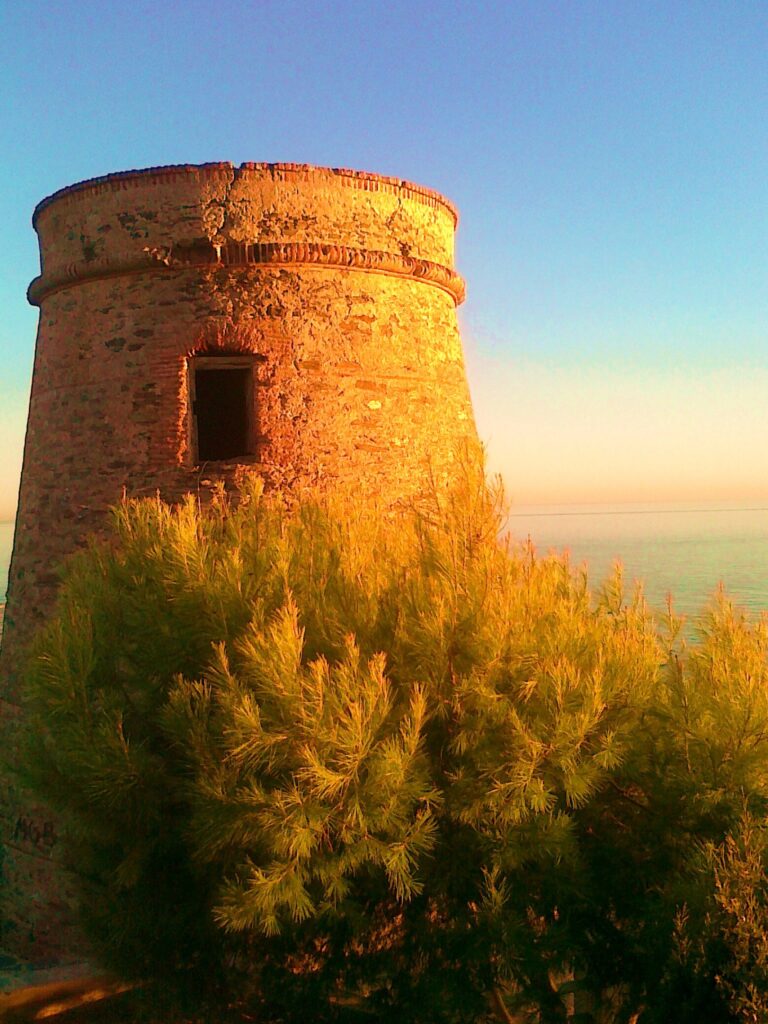
White villages, hilltop fortresses and narrow street layouts originate from this era. The iconic Castillo de San Miguel in Almuñécar and Salobreña Castle remain powerful symbols of this time.
A Land of Farmers and Fishermen
For generations, the Costa Tropical remained a working region. Fishing villages lined the coast, while inland valleys produced sugar cane, citrus fruits and later tropical crops.
Unlike many coastal areas, tourism arrived late — and cautiously. This allowed local identity to remain intact.
The sea was never decorative; it was functional. The land was never ornamental; it was productive.
That mentality still defines the region.
Resistance to Mass Development
When large-scale coastal tourism expanded elsewhere in Spain during the 1960s and 70s, the Costa Tropical largely resisted.
Geography played a role — steep cliffs and limited flat land — but so did local attitude. Development remained controlled, fragmented and small-scale.
This decision preserved authenticity, landscape and architectural integrity.
Character Today
The Costa Tropical’s character can best be described as:
-
Authentic and unpolished
-
Proudly Andalusian
-
Deeply connected to land and sea
-
Calm, grounded and human in scale
Life here feels lived rather than staged.
Whitewashed villages still function as communities. Agriculture still matters. Local festivals remain local — not performances for visitors.
A Region with Identity
The Costa Tropical does not imitate neighbouring coasts. It does not compete in glamour, nightlife or prestige.
Instead, its strength lies in identity.
It is a region for people who value depth over display, tradition over trends, and environment over exposure.
Its character is not something created — it’s something preserved.
And that is exactly what makes it increasingly rare.
Things to do
Things to Do — Costa Tropical
The Costa Tropical offers a lifestyle built around nature, movement and simplicity. Activities here are shaped by the landscape — sea, mountains and fertile valleys — creating a rhythm that feels active without being overwhelming.
This is a region where experiences happen naturally, not on a schedule.
Beach Life & Hidden Coves
The coastline is known for its small bays, clear water and less crowded beaches. From long sandy stretches to hidden coves between cliffs, beach life remains relaxed and uncommercial.
Popular activities include:
-
Swimming and sunbathing
-
Snorkelling and diving
-
Paddleboarding and kayaking
-
Coastal walks along natural paths
Many beaches retain a local character, with small chiringuitos rather than large beach clubs.
Water Sports & Marine Activities
Thanks to clean waters and protected bays, the Costa Tropical is well suited for:
-
Scuba diving and freediving
-
Sailing and boat trips
-
Fishing and coastal excursions
La Herradura is especially known for its marine reserve and diving conditions.
Walking, Hiking & Nature
The region offers immediate access to nature.
Residents enjoy:
-
Coastal walking routes
-
Hillside trails with sea views
-
Countryside paths through avocado and mango farms
-
Mountain hikes toward the Alpujarras
Within a short drive, landscapes shift from Mediterranean coast to alpine terrain.
Mountain & Winter Sports
One of the Costa Tropical’s most unique advantages is proximity to the Sierra Nevada.
In winter, residents can ski or snowboard in the morning — and return to the coast for lunch by the sea. This combination is rare anywhere in Europe.
Cultural Exploration
The region offers rich historical experiences, including:
-
Moorish castles and fortresses
-
Historic old towns and white villages
-
Local museums and archaeological sites
Cultural life remains understated and authentic, deeply connected to Andalusian traditions.
Local Markets & Gastronomy
Weekly markets, fresh produce stalls and small family-run restaurants are central to daily life.
Activities often revolve around:
-
Visiting local markets
-
Seasonal food festivals
-
Coastal dining and fresh seafood
-
Discovering inland village cuisine
Food here is local, seasonal and unpretentious.
Festivals & Community Life
Throughout the year, towns host traditional fiestas, religious celebrations and summer events. These gatherings are community-driven — welcoming, genuine and deeply rooted in local culture.
Everyday Enjoyment
Many of the most valued “activities” are simple:
-
Morning walks by the sea
-
Coffee in village plazas
-
Sunset viewpoints
-
Gardening and outdoor living
-
Social evenings with neighbours
Life is not fast — but it is full.
The Experience in Summary
The Costa Tropical is not about entertainment complexes or nightlife districts. It’s about living close to nature, staying active naturally, and enjoying space and calm.
It offers a lifestyle where doing less often feels like gaining more.

Property Styles
Property Styles — Costa Tropical
Property styles on the Costa Tropical reflect the region’s history, geography and restrained development. Unlike heavily urbanised coastlines, building here has remained low-density and varied, resulting in a diverse mix of homes rather than uniform resorts.
The market offers character, space and individuality — often with views and privacy that are increasingly rare elsewhere.
Traditional Village Homes
In coastal towns and inland villages, many properties are traditional Andalusian houses featuring:
-
Whitewashed façades
-
Thick stone walls
-
Inner patios and terraces
-
Rooftop solariums with sea or mountain views
These homes are often located in historic centres and appeal to buyers seeking authenticity and charm. Renovation opportunities are common, allowing modern interiors within traditional structures.
Townhouses & Local Residences
Across towns such as Almuñécar, Salobreña and Motril, you’ll find practical townhouses built for permanent living.
Typical characteristics include:
-
Multi-level layouts
-
Generous outdoor space
-
Residential neighbourhood settings
-
Strong community environment
These properties suit families and long-term residents rather than holiday-only use.
Apartments & Small-Scale Developments
Apartments exist mainly in low-rise complexes rather than high towers. Many developments were built with restraint, offering:
-
Limited number of units
-
Communal pools
-
Sea-facing terraces
-
Walking distance to beaches
Large-scale resort-style complexes remain rare, preserving the open feeling of the coastline.
Villas & Detached Homes
Detached villas are one of the region’s strongest attractions.
Often located on hillsides or at the edge of towns, these homes commonly offer:
-
Panoramic sea views
-
Private pools
-
Larger plots
-
High levels of privacy
Compared to more saturated markets, villas on the Costa Tropical typically provide more land and views for the investment.
Country Homes & Fincas
Inland valleys and hillside areas feature fincas and rural villas surrounded by nature.
These properties appeal to buyers seeking:
-
Peace and seclusion
-
Agricultural land or fruit trees
-
Strong connection to nature
-
Easy access to coast and towns
Many fincas benefit from established irrigation systems, reflecting the region’s agricultural heritage.
Contemporary & New-Build Homes
New construction exists but remains selective.
Modern homes typically focus on:
-
Clean architectural lines
-
Energy efficiency
-
Large terraces
-
Seamless indoor–outdoor living
Development is controlled, meaning new-build opportunities are limited — a factor that supports long-term value.
Overall Property Character
Property styles on the Costa Tropical can be summarised as:
-
Low-density and spacious
-
Individual rather than uniform
-
Strong in character and views
-
Oriented toward real living, not mass tourism
This is a market where properties feel personal — not produced.
For buyers seeking originality, privacy and connection to landscape, the Costa Tropical offers a property profile that is becoming increasingly rare along the Mediterranean.
Property Prices
Property Prices — Costa Tropical
The Costa Tropical remains one of the most accessible coastal property markets in southern Spain, especially when compared to the Costa del Sol. While prices have risen in recent years, the region continues to offer strong value — particularly in terms of space, views and lifestyle.
The market is driven less by speculation and more by long-term lifestyle buyers.
Average Price Levels
Property prices vary significantly depending on location, views and proximity to the sea, but overall remain well below more saturated coastal areas.
Indicative average prices:
-
Apartments: approx. €1,800 – €2,600 per m²
-
Townhouses: approx. €200,000 – €400,000 depending on size and location
-
Villas: commonly €350,000 – €900,000+, with sea-view properties at the higher end
-
Country homes & fincas: often €250,000 – €600,000, depending on land size and condition
Prime frontline or panoramic sea-view properties can exceed these ranges, but remain competitive compared to neighbouring regions.
Price Differences by Area
-
Almuñécar & La Herradura: generally the highest-priced zones due to services, beaches and demand
-
Salobreña: strong value with character and growing interest
-
Motril: more affordable, offering larger properties and strong infrastructure
-
Inland villages: lowest entry prices, with excellent value for space and tranquillity
This variety allows buyers to enter the market at different levels.
Market Trends
Over the past years, the Costa Tropical has experienced steady but controlled growth. Prices have increased, but without the sharp spikes seen in more commercial markets.
Key factors supporting long-term value:
-
Limited new construction
-
Controlled urban planning
-
Growing international awareness
-
Improved infrastructure and access
-
Strong lifestyle appeal
Demand is rising — but supply remains naturally limited.
What Buyers Receive for Their Budget
Compared to the Costa del Sol, buyers typically gain:
-
More living space
-
Larger terraces or plots
-
Better views
-
Lower community and maintenance costs
This is one of the region’s strongest selling points.
Investment Perspective
The Costa Tropical is not a fast-flip market. It attracts buyers focused on:
-
Long-term ownership
-
Lifestyle-driven investment
-
Rental potential without saturation
-
Capital growth through scarcity, not hype
As neighbouring coastal areas become increasingly priced out, interest in the Costa Tropical continues to grow organically.
The Bottom Line
Property prices on the Costa Tropical remain realistic and grounded. The region offers a rare balance of affordability, quality of life and future potential — without the volatility of overheated markets.
For buyers seeking value with character, this coast still offers genuine opportunity.
Distances
Distances — Costa Tropical
The Costa Tropical is strategically located along the southern coast of Granada province, offering a unique position between the Mediterranean Sea and the Sierra Nevada mountains. While more tranquil and less developed than neighbouring coasts, the region remains well connected.
Key Regional Connections
-
Granada city – approx. 50–60 minutes
-
Málaga city – approx. 1 hour 15 – 1 hour 30 minutes
-
Almería – approx. 1 hour 15 minutes
-
Sierra Nevada ski resort – approx. 1 hour 15 minutes
This rare proximity allows residents to enjoy beach and mountain living within the same day.
Airports
-
Málaga International Airport (AGP) – approx. 75–90 minutes
-
Granada Airport (GRX) – approx. 60 minutes
-
Almería Airport (LEI) – approx. 75 minutes
This multi-airport access provides flexibility for both international and domestic travel.
Main Coastal Towns (Approximate Driving Times)
-
Almuñécar ↔ La Herradura – 5 minutes
-
Almuñécar ↔ Salobreña – 15 minutes
-
Salobreña ↔ Motril – 10 minutes
-
Motril ↔ Almuñécar – 20 minutes
Distances within the region are short, reinforcing a relaxed, accessible lifestyle.
Road Infrastructure
-
Direct access via the A-7 Mediterranean Motorway, connecting the coast efficiently east and west
-
Scenic mountain roads linking inland villages and the Alpujarras
-
Ongoing infrastructure improvements improving travel comfort without large-scale development
Daily Convenience Distances
-
Beaches: typically 5–10 minutes from most residential areas
-
Supermarkets and services: usually within 10–15 minutes
-
Hospitals and medical centres: concentrated around Motril and Almuñécar
Why These Distances Matter
The Costa Tropical offers something rare: isolation without disconnection.
You’re far enough from mass tourism to enjoy peace and authenticity — yet close enough to major cities, airports and services to live comfortably year-round.
Few regions in southern Europe offer such a balanced geographical position.
In short: remote in feeling, connected in reality.
Education
Education — Costa Tropical
Education on the Costa Tropical is primarily rooted in the Spanish public school system, supported by a smaller number of private and international options in the wider region. The setup reflects the character of the area: local, community-based and oriented toward long-term living rather than short-term relocation.
Public Education
Most families in the Costa Tropical use public Spanish schools, which are well integrated into local towns and villages.
These schools offer:
-
Free or low-cost education for residents
-
Spanish national curriculum
-
Strong community involvement
-
Small to medium-sized class environments
Schools are available in all main towns, including Almuñécar, Salobreña and Motril, covering both primary and secondary education.
For families planning full integration into Spanish life, public education works well and encourages language immersion from an early age.
Secondary Education & Colleges
Larger towns such as Motril provide more extensive secondary education options, vocational training centres and specialised studies.
Motril also functions as the educational hub of the region, with broader academic and technical programmes.
Private & International Education Options
The Costa Tropical has limited international schools directly within the region. However, families have access to several alternatives within reasonable driving distance:
-
Granada city offers private bilingual and international-style schools
-
Málaga province (approx. 75–90 minutes) provides full British and international school options
Some families choose a hybrid approach, combining local schooling with private tutoring or bilingual academies.
Language Academies & Support
Language schools are common throughout the region, offering:
-
Spanish courses for children and adults
-
English academies for local students
-
Exam preparation and bilingual support
These centres play an important role for international families integrating into the community.
Universities & Higher Education
University of Granada — one of Spain’s most respected universities — is located approximately one hour away, offering a wide range of academic disciplines.
This proximity adds long-term educational value for families with older children.
Education Lifestyle Perspective
Education on the Costa Tropical is not built around elite international systems, but around community, stability and integration.
Children grow up close to nature, within smaller school environments, and with strong social connections. Outdoor life, sports and local culture play a large role alongside formal education.
What Families Should Know
The Costa Tropical is best suited for families who:
-
Value integration over international bubbles
-
Prefer smaller school communities
-
Are open to Spanish-language education
-
Prioritise lifestyle and environment
For those seeking large international school campuses on the doorstep, other regions may suit better. For families seeking grounded, authentic living — it fits extremely well.
In Summary
Education on the Costa Tropical supports a balanced, local and long-term lifestyle. While international schooling options are more limited than on the Costa del Sol, the region compensates with strong community education, proximity to Granada, and an environment where children grow up connected to nature and culture.
Nearby Restaurants
Nearby Restaurants — Costa Tropical
Coastal & Beachfront Dining
Restaurante Chiringuito Casa Emilio – One of the most talked-about beach restaurants in Salobreña, serving fresh seafood and Mediterranean classics right by the sea — perfect for lunch with a view.
La Bonita beach – Relaxed beachfront bar & grill in Almuñécar popular for informal lunches, drinks and casual evenings close to the water.
Mar de Cabria Gastrobar – Stylish seaside gastro spot on Playa Cabria in Almuñécar, great for Mediterranean dishes and light bites near the beach.
La Dorada de Plata Bar – Restaurant – Classic Costa Tropical chiringuito in Almuñécar, known for grilled fish and relaxed seaside dining.
Chiringuito Cúpula Playa – Popular Mediterranean beachfront restaurant in La Herradura with panoramic sea views and a lively yet laid-back atmosphere.
Restaurante La Barraca – Cantarriján – Scenic beachside restaurant just outside La Herradura, known for fresh local fish and relaxed lunches by the water.
Town & Local Favourites
Restaurante Los Geraneos – A beloved local restaurant in Almuñécar’s old town with Mediterranean cuisine and a lively central location.
Restaurante Mar De Plata – Long-standing traditional restaurant in Almuñécar known for seafood and local dishes — a classic choice for lunch or dinner.
Restaurante Andalusí – Casual tapas restaurant in Almuñécar, ideal for authentic local bites and sharing plates midday.
Restaurante Gastrobar De la Flor – Well-reviewed Spanish restaurant in central Almuñécar with seasonal dishes and a welcoming vibe.
Restaurante El Balcón de Cotobro – Mediterranean restaurant in Almuñécar with terrace dining and sea views — great for a more relaxed dinner.
Maison Maréame – Highly rated restaurant in Motril, known for quality seasonal dishes and a comfortable downtown setting.
Restaurante La Ballena Azul – Motril seafood restaurant with terrace views over Poniente beach and excellent fresh fish options.
Restaurante La Roka – A standout choice in Salobreña with modern Mediterranean cuisine and high local acclaim.
MarDela Restaurante – Elegant Mediterranean & grilled cuisine in La Herradura with strong reviews for quality and atmosphere.
Kalu Cantina Mediterránea – Well-rated cantina in La Herradura, offering Mediterranean dishes in a cosy setting.
Restaurante Castillo. Muy Rico El Desayuno. – A popular local choice for breakfast or light meals in Almuñécar — a good casual option.
Dining on the Costa Tropical
The region’s gastronomy is rooted in fresh seafood, Mediterranean flavours and outdoor dining. Restaurants range from classic chiringuitos on the beach to traditional town favourites and modern Mediterranean kitchens — many embracing local produce from mountain farms and tropical fruit groves.
Whether you’re after sunset seafood, tapas in a plaza, seaside lunch spots, or quality family dinners, the Costa Tropical delivers authentic Andalusian traditions with views and atmosphere that reflect daily life on this quieter coastline.